Foaming and bubbles
Visualize candidate changes in foaming, air entrainment, and surface behavior.

Industrial Fluid AI
ABYSS surfaces candidate changes in foaming, oil-film-like surface patterns, leaks, turbidity, liquid-level changes, and flow anomalies from ordinary camera footage. It supports 24/7 visual monitoring for fluid scenes that are hard to instrument with point sensors alone.
24/7
Monitoring
AI
Fluid Vision
PoC
Ready
Detection Scope
ABYSS focuses on visual fluid changes that are difficult to capture with point sensors alone.
Visualize candidate changes in foaming, air entrainment, and surface behavior.
Extract candidate changes in color, opacity, surface reflection, and oil-film-like patterns.
Monitor visible wet areas, liquid spread, overflow events, and unexpected liquid movement.
Track visible changes in tanks, channels, pits, and open water surfaces.
Visualize changes in speed, direction, mixing, agitation, and process stability.
Convert expert visual checks into consistent, auditable AI monitoring.
Capability Boundary
ABYSS is not a universal image AI. It is designed for video of fluids such as water, oil, and chemical liquids, and it turns visible state changes into candidate signals operators can review.
Depending on site conditions, additional cameras, lighting, external sensors, downstream models, or system integration may be required.

Technology
ABYSS is designed to recognize fluid motion itself, not only static visual patterns. It evaluates surface behavior, flow, reflection, and temporal change.
Models are tuned for the complexity of actual industrial scenes: lighting variation, camera noise, mixed liquids, foam, films, and moving surfaces.
ABYSS can start from existing camera footage and connect alerts to dashboards, API outputs, and operational review workflows.
Use Cases

Monitor foaming in reaction tanks and visible leak candidates around pipes and process equipment.

Surface oil-film-like changes in wastewater pits, turbidity changes in cooling water, and visual signs of environmental risk.

Support operator first checks and visual records for liquid level, bubbles, foaming, and filling-process changes.
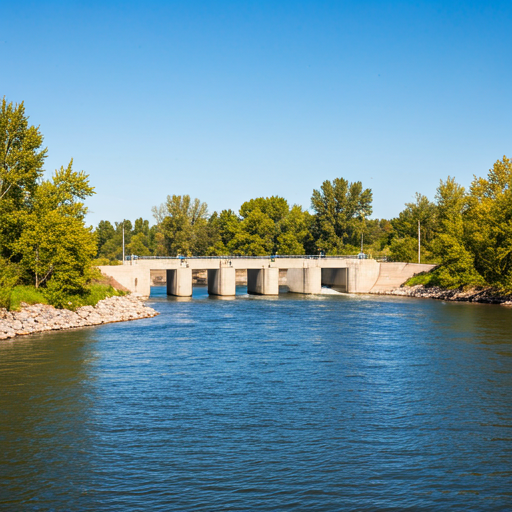
Monitor rapid water-level rise, debris accumulation, unusual ripples, and remote safety conditions.

Deployment
Camera streams are connected to ABYSS in the cloud or through an edge deployment.
The fluid AI model analyzes motion, shape, brightness, flow, and surface changes frame by frame.
Visual deviations are converted into alerts while noise filters reduce unnecessary notifications.
Detection data is visualized in dashboards and can be connected to existing alert or SCADA workflows.
4
Main Industries
6
Detection Types
24/7
Monitoring
PoC
Video First
Leadership
ABYSS is developed by a team combining industrial AI implementation, fluid AI model development, and new-business execution.

CEO
Completed graduate studies in Integrated Systems at Tokyo Institute of Technology.
Provided overseas expansion consulting for Japanese companies in Germany.
After returning to Japan, supported new-business consulting for major trading, electronics, and medical device companies.
Managed multi-site data infrastructure projects across departments in large enterprises.

CTO / AI Engineer
Completed graduate studies in Medical and Dental Engineering at Tokyo Medical and Dental University.
Worked on RPA and plant simulator development at Mitsubishi Gas Chemical.
Served as lead engineer at fluid AI startup AnyTech, developing proprietary fluid AI models.
Continued the fluid AI work through the subsequent M&A with JFE Engineering.
Download the product deck or schedule a discussion about your current inspection challenge.